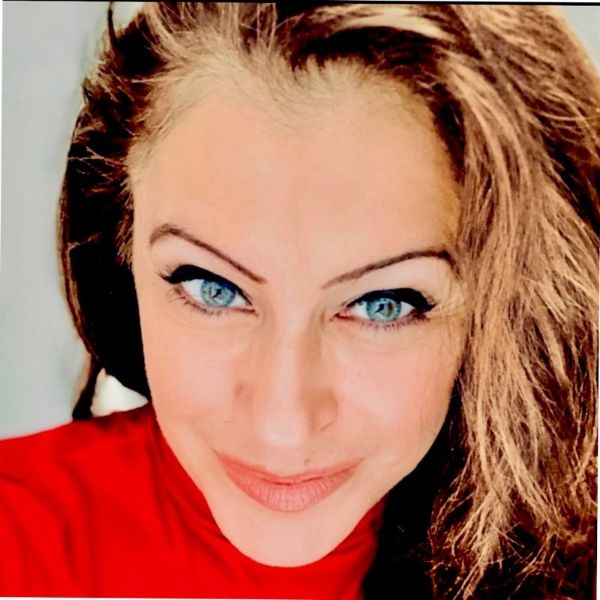
The Powerful Journey From Teacher to Urology Sales Success
In this episode of the Medical Sales Podcast, host Samuel Adeyinka sits down with Naz Momtaz, a Medical Sales Career Builder graduate who broke into medical device sales after transitioning from teaching and family business sales, then quickly earned a promotion to Territory Manager for Endo Urology at Becton Dickinson. Naz shares what it is really like to work in elective urology medical device sales, from covering cases in the OR and introducing new products to surgeons, to navigating value analysis, purchasing, and hospital contracts. She also opens up about the challenges of breaking into the industry, how networking and mentorship helped her land her first role, and what it takes to succeed in a space where relationship building, persistence, and problem solving make all the difference. This is a must listen for anyone who wants an honest look at how to enter medical sales, grow fast, and thrive in a competitive hospital based environment.
Connect with Naz Momtaz: LinkedIn
Connect with Me: LinkedIn
Love the show? Subscribe, rate, review, and share! Here’s How »
Listen on Spotify or Apple Podcast
Transcription:
Samuel Adeyinka (Host):
Hello, and welcome to the Medical Sales Podcast. I’m your host, Samuel, the founder of a revolutionary medical sales training and mentorship program called the Medical Sales Career Builder. And I’m also host of the Medical Sales Podcast.
On this podcast, I interview top medical sales reps and leading medical sales executives across the entire world. It doesn’t matter what medical sales industry, from medical device to pharmaceutical to genetic testing and diagnostic lab. You name it. You will learn how to either break into the industry, be a top 10 percent performer within your role, or climb the corporate ladder.
Welcome to the Medical Sales Podcast. And remember, I am a medical sales expert sharing my own opinion about this amazing industry and how it can change your life.
Samuel Adeyinka (Host):
So now, I am so excited to be talking to you today because you are a graduate of the Medical Sales Career Builder. I like to say you are one of our very own.
And what’s beautiful about the chance to talk to you today is, you graduated from our program, you got the job of your dreams, you killed it, you got promoted, and now you’re literally looking for someone to backfill your position. And you’re looking at our students.
But before I say any more, tell us who you are today and what you do.
Naz Momtaz (Guest):
I am the Territory Manager in Texas for Endo Urology for Becton Dickinson.
I am in the OR a lot. I sell Endo Urology, which is surgical urology products to hospitals, mostly disposable products.
Samuel Adeyinka (Host):
Got it. So you’re in an elective position because your procedures are scheduled.
Naz Momtaz (Guest):
Yes. They’re necessary, but they’re scheduled.
Samuel Adeyinka (Host):
So medical device elective, and the elective is urology.
What exactly are you selling. And walk us through a day in the life. When you wake up, what you do up to 12, and then after.
Naz Momtaz (Guest):
We sell almost every disposable product used in kidney stone procedures, and sometimes benign prostate hyperplasia procedures.
Everything from guidewires, stents, scopes, balloon dilators, and different types of catheters.
My day is different from day to day. Sometimes I cover a case at 7:30 a.m.
Then at noon, I host a lunch to introduce a new product to a doctor.
And a lot of times in the afternoon, I have a meeting with someone from value analysis.
There are so many different aspects to our job because we sell to hospitals.
There’s the clinical side. We need doctors and surgeons on our side to even have a chance at selling our product. Their priority is patient outcomes, and also whether the product saves them time in the OR.
Then we talk to OR staff, managers, directors, and urology nurses. They care about efficiency and time management. We need to make sure our product solves problems for them.
Then we take the proposal to value analysis or purchasing. Their job is to save the hospital money.
So we wear multiple hats in this job.
Samuel Adeyinka (Host):
Are you on a team, or is it more autonomous?
Naz Momtaz (Guest):
I’m the Territory Manager in my territory, and I have one associate.
Samuel Adeyinka (Host):
What do they do for you?
Naz Momtaz (Guest):
Their role is called a Procedural Specialist.
It’s similar to a clinical specialist, but more involved in sales.
Their job is to be in our existing accounts. They visit the OR a lot. They sit in cases to make sure things go smoothly. They run our trials. And they grow the business from within existing accounts.
Samuel Adeyinka (Host):
When you say they sit in cases to make sure things go smoothly, are they there with you or by themselves?
Naz Momtaz (Guest):
They’re in cases by themselves.
Samuel Adeyinka (Host):
So you’re the one establishing business, and they’re covering cases where business is already established.
Naz Momtaz (Guest):
Yes.
But once a Procedural Specialist becomes experienced enough, the roles blend a little bit.
I do more cold calling and getting new business.
They grow the business inside existing accounts.
And when you’re in the OR and a doctor has a problem and you happen to have a solution, that’s a great way of selling. So they do add new opportunities to the funnel too.
Samuel Adeyinka (Host):
How often do you talk to your procedural specialist?
Naz Momtaz (Guest):
Every day. Multiple times a day.
I talk to my procedural specialist more than I talk to anyone else throughout the day.
Samuel Adeyinka (Host):
When you got your procedural specialist, did you get to choose them, or were you part of the interview process?
Naz Momtaz (Guest):
The procedural specialist was here when I started my role.
But we’re looking for a new procedural specialist now, and I’m involved in hiring.
Samuel Adeyinka (Host):
That’s music to my ears.
So you’re in elective urology, you talked about the products, the call points, and the day to day.
Take us to a moment where something happened in front of you and you said, oh my gosh, this is what I do. I love what I do.
Naz Momtaz (Guest):
There was a case scheduled at 11 a.m. for a trial with a big health system.
I showed up at 10 to be safe and hung around the hospital. A lot of times I do admin work in the lobby while waiting.
The previous case ran long, and our case kept getting delayed one hour at a time.
I ended up staying for six hours.
During that time I talked to the urology nurse, the techs in the OR, the OR manager or director, and I even went downstairs and talked to the purchasing person.
The case didn’t start until 5 or 6 p.m.
Right before the case started, I was standing outside to give the patient privacy, and the doctor walked in and said, you’ve been waiting for me this whole time.
I said yes.
He said, it’s been six hours.
I said yes, it’s my job.
He was so appreciative. And to this day, I have a really good relationship with that doctor.
We did a trial for one product, but it opened the door to talk about other products too.
When I walked out of that case, I thought, I love what I do. I can stick around, support, and it feels good.
Samuel Adeyinka (Host):
That’s beautiful.
So that case started at 5 or 6 p.m. When do your days typically end?
Naz Momtaz (Guest):
It depends.
I’ve left the hospital at 7 p.m. There are days I’m done at 4 p.m., then I do an hour or two of admin and I’m done.
It really depends.
Samuel Adeyinka (Host):
Would you say this role is good for a family person. Enough work life balance and autonomy to do what you need to do and still have time for life?
Naz Momtaz (Guest):
Yes. I have a family, and I have support, which is important.
My territory is large, but a lot of times I choose to drive three hours for a case and drive three hours back home so I can be home.
Sometimes I wake up at 4 a.m. to do that.
If I have cases two days in a row that are far away, then I’ll spend the night.
On average, I’m away from home one to two nights a week.
It’s doable. A lot of people on my team have families and manage it.
Samuel Adeyinka (Host):
How long have you been in medical sales now?
Naz Momtaz (Guest):
About 14 months.
Samuel Adeyinka (Host):
So you graduated from our program about 14 months ago.
What were you doing before medical sales?
Naz Momtaz (Guest):
Before joining the program, I was doing dental sales for a family business.
I didn’t work for a big medical device company. I was doing things on my own, learned a lot about scheduling and running my day.
But my first real medical sales job was with BD after I joined.
And before that, I was a teacher for years.
Samuel Adeyinka (Host):
You were a teacher. What kind?
Naz Momtaz (Guest):
I was a high school science teacher.
Samuel Adeyinka (Host):
So what happened. What made you want to go into medical sales?
Naz Momtaz (Guest):
Teaching was never permanent for me. I wanted to give back for a few years and then move into a more rewarding career.
Toward the end of teaching, I researched and decided on medical sales.
I had clinical roles before. I worked in a clinic. I enjoyed teaching and talking to people. I liked transferring knowledge.
I put all of that together, and I also had some sales background.
So I started applying and networking a little, but it was so hard. I couldn’t get a single interview.
Teachers understand this. If you want to switch careers, it can be smart to quit teaching and go into something else.
So I quit teaching, and my family business was expanding. It was an opportunity to sharpen my sales skills.
It was temporary, but I kept applying to medical sales roles and still couldn’t get traction.
Then I came across EYS.
Samuel Adeyinka (Host):
How did you come across us?
Samuel Adeyinka (Host):
I hope you’re enjoying today’s episode. And I want to let you know our programs cover the entire career of a medical sales professional, from getting into the medical sales industry to training on how to be a top performer in medical sales, to masterfully navigating your career to executive-level leadership.
These programs are personalized and customized for your specific career and background, and trained by over 50 experts, including surgeons.
Our results speak for ourselves, and we’re landing positions for our candidates in less than 120 days in top medical technology companies like Stryker, Medtronic, Merck, Abbott. You name it.
Would you run an Ironman race without training and a strategy. You wouldn’t. So why are you trying to do the same with a medical sales position.
You need training. You need a strategy. Visit evolveyoursales.com. Fill out the application, schedule some time with one of our account executives, and let’s get you into the position you’ve always dreamed of.
Naz Momtaz (Guest):
I think it was on LinkedIn.
I found you on LinkedIn, and at first I thought it was crazy. I thought, I can do this on my own.
I researched on Reddit and people said you can do it on your own.
But I had been trying for almost two years.
So I joined the program. It took me a while. I did the first interview, talked to my husband, consulted a few people, and I was like, am I crazy.
But I felt like I had to try.
The guarantee helped. If you do certain things, you will get a job.
That was reassuring.
I knew I’d be in the program until I got my job, and I would have support.
They told me I’d get a mentor, get interviews, seminars, speakers, and classes. Mentors tracked progress.
It felt organized. It felt like you knew what you were doing. So I joined.
Samuel Adeyinka (Host):
In hindsight, what was the number one thing you got from the program that was a game changer?
Naz Momtaz (Guest):
Networking.
I was doing it before, but not properly or effectively.
The way you taught me to network, I got so many people to respond. I was surprised when I got my first response from a medical sales rep.
I talked to a rep from Abbott for an hour and a half while she was driving to cover a case. That was amazing.
Networking is how I got introduced to Endo Urology and BD.
It’s a long story, but I met someone at BD, applied for a job, then applied for another job, and they already knew me because of the networking. That’s how I got my first job at BD.
The other big thing was mentors.
I called my mentor before every interview, and after interviews to reflect.
When you’re trying to sell yourself to get your first job, you’re alone.
But when you’re in medical sales, you have a team, a manager, and support.
You guys gave me the support system I needed. It made it easier to stay committed and stick with my goal.
Samuel Adeyinka (Host):
When you were in the program, what did you think medical sales would be like. And how does that compare to what it’s actually like now that you’re in it.
Naz Momtaz (Guest):
The program gave me a pretty good idea of what it would be like, especially through the seminars.
We had reps, hiring managers, and even physicians come and talk.
I learned what it would be like to stand next to a competitor in the OR. And I do that often now.
I learned what physicians really want.
It’s similar to what I expected.
But there were some things I learned once I got into the role.
My first job at BD was in home care. I was selling prescription medical devices to physicians, and they were my only call point.
If there were obstacles with insurance or ordering, I would remove those obstacles.
It was focused on what providers wanted and what patients needed.
After six months, I started interviewing for the Territory Manager role I’m in now, and it’s a completely different division.
This is surgery, and we still talk to surgeons, but we also talk to OR staff, managers, and directors. And we talk to purchasing.
There’s more to manage in this role.
I had to learn how to switch hats.
Providers look at things one way, purchasing has different goals.
We do a lot of value analysis. We have to show purchasing how the product saves money or benefits them financially.
Samuel Adeyinka (Host):
What are some of the biggest challenges in your current role?
Naz Momtaz (Guest):
Contracts.
With big health systems, your product can be great, surgeons can love it, everyone can be on board, but then you try to close and they have contracts with competitors.
A lot of these contracts are huge. They’re not just for urology. They cover multiple parts of the hospital, women’s health, oncology, cardiology, everything.
If they buy from us, their prices might increase on other categories tied to that contract.
That’s the biggest challenge.
There are ways around it. You can wait for contracts to expire or buy them out, but it’s a major obstacle.
Samuel Adeyinka (Host):
Outside of a full lecture on how to steal business, what have you learned to do to create opportunities when a hospital has contracts and existing relationships?
Naz Momtaz (Guest):
Because we have a large portfolio, I often start with hospitals that already use some of our products and have trust in the company.
I also contact other reps at my company a lot. They have relationships and can introduce me to the right people.
A lot of times my first call point is the doctors.
It starts with questions. What are you using. Are you happy. What challenges are you facing. How does that impact productivity and patient outcomes.
If they’re perfectly happy, they don’t need you, and you don’t need to be there.
But most of the time, there are challenges.
If we have a solution, we offer it. And our products usually need trials.
So we set up trials, involve OR staff, and make sure the solution addresses everyone’s pain points, including flow and time management.
At the same time, you also have to talk to purchasing early so you don’t waste your time.
Because you can do all this work and purchasing can still say no because of contracts or cost structure.
There are a lot of moving parts in building an opportunity.
Samuel Adeyinka (Host):
Let’s switch gears and talk money.
What’s the range of earnings for someone in your role?
Naz Momtaz (Guest):
It’s 150 to 200.
Samuel Adeyinka (Host):
When you were in the program, what did it feel like to imagine making that, and then actually be living it?
Naz Momtaz (Guest):
I was taking it one day at a time. I just wanted a way in.
Honestly, I thought it would take a lot longer to get to this point.
But once you get in and prove yourself, people are watching.
They know what you’re doing. Your results are there. Your numbers are there.
And if you stay connected with corporate and other reps to solve problems, people notice.
I couldn’t have imagined that after six months I would feel like I’d start transitioning.


















 Medical Territory Manager!
I was a Regional Sales Representative for Long-Term Care pharmacy services. I had dreamed of getting into the med sales industry when I went into my career as a nurse, but the pharmacy sales job came to me, and I had just settled. Fortunately, I had a job shakeup that allowed me to determine that now was the time to pursue my original vision.
I absolutely would not have this position without Samuel and the Evolve Your Success community. A lot of people my age would just stop trying, but EYS believed in me.
EYS allowed me to break into the industry in 90-Days after I had been trying on my own for over two years! I had lots of recruiter screenings, and a few interviews with hiring managers, but I was never offered a position.
Before EYS, I didn’t realize I was doing the bare minimum to get hired. I was applying everywhere, hoping to get noticed and waiting. It just wasn’t working! I didn’t know that that was not enough to compete in an industry this sought after, and against people who knew what I didn’t know about the process.
Of course, I had to think hard before making a financial investment that’s reasonably substantial. But when I read the testimonials of real med sales reps on the site and learned that I wasn’t the only one taking a chance on my success, that EYS was sharing that risk also, I knew I had to do it. Though you might be able to cobble together some of the steps of getting a role in med sales from online research on your own, you just can’t know what you don’t know!
The process of going through EYS presents this insider knowledge to the student, as well as giving you a progression of difficulty as you obtain the information, and you begin to master it. Not only that, but they give you access to amazing mentors and instructors, allow you to practice your interview skills, and teach you how to market yourself through social media and your own website! I cannot stress enough that EYS was the factor that made the difference in my successfully landing my dream job! The support, structure, and knowledge gained was invaluable!
I would recommend this course to ANYONE looking to break into medical sales
Thank you so much, EYS! This journey has been life changing and has resulted in the successful culmination of my 18-Year ambition!
Medical Territory Manager!
I was a Regional Sales Representative for Long-Term Care pharmacy services. I had dreamed of getting into the med sales industry when I went into my career as a nurse, but the pharmacy sales job came to me, and I had just settled. Fortunately, I had a job shakeup that allowed me to determine that now was the time to pursue my original vision.
I absolutely would not have this position without Samuel and the Evolve Your Success community. A lot of people my age would just stop trying, but EYS believed in me.
EYS allowed me to break into the industry in 90-Days after I had been trying on my own for over two years! I had lots of recruiter screenings, and a few interviews with hiring managers, but I was never offered a position.
Before EYS, I didn’t realize I was doing the bare minimum to get hired. I was applying everywhere, hoping to get noticed and waiting. It just wasn’t working! I didn’t know that that was not enough to compete in an industry this sought after, and against people who knew what I didn’t know about the process.
Of course, I had to think hard before making a financial investment that’s reasonably substantial. But when I read the testimonials of real med sales reps on the site and learned that I wasn’t the only one taking a chance on my success, that EYS was sharing that risk also, I knew I had to do it. Though you might be able to cobble together some of the steps of getting a role in med sales from online research on your own, you just can’t know what you don’t know!
The process of going through EYS presents this insider knowledge to the student, as well as giving you a progression of difficulty as you obtain the information, and you begin to master it. Not only that, but they give you access to amazing mentors and instructors, allow you to practice your interview skills, and teach you how to market yourself through social media and your own website! I cannot stress enough that EYS was the factor that made the difference in my successfully landing my dream job! The support, structure, and knowledge gained was invaluable!
I would recommend this course to ANYONE looking to break into medical sales
Thank you so much, EYS! This journey has been life changing and has resulted in the successful culmination of my 18-Year ambition! 


 Sports Medicine in Phoenix! I extend so much gratitude to the Evolve Your Success group as I land this role and get ready to pursue my dream job. I am a Physical Therapist who became a little stuck in the profession due to issues with reimbursement and the difficulty for continued growth upwards. I turned to EYS to assist me in learning about the medical sales industry and gain knowledgable mentors who were able to help coach me in this process. I am a strong believer in surrounding yourself with the best and good things will happen. I did work hard, but with the support of my mentors and other colleagues going through a career change, I felt a sense of community and it confirmed my drive to get into this industry. I have already learned so much through the interview process, and feel very blessed to have had the resources this group provided. I have made lifelong friends and I cannot wait to continue to follow others’ journeys to pursue this incredible field. I urge you to give Evolve Your Success a try to gain mentorship, guidance, and support through any career transition.
 and am excited to make a difference in patients’ lives as a Pharmaceutical Sales Specialist.
 ! Though I truly enjoyed working as a physical therapist, I can’t wait to start my career in the sales world as a Clinical Account Executive.
 . I owe this opportunity to Samuel, the program, and the incredible mentors at EYS.