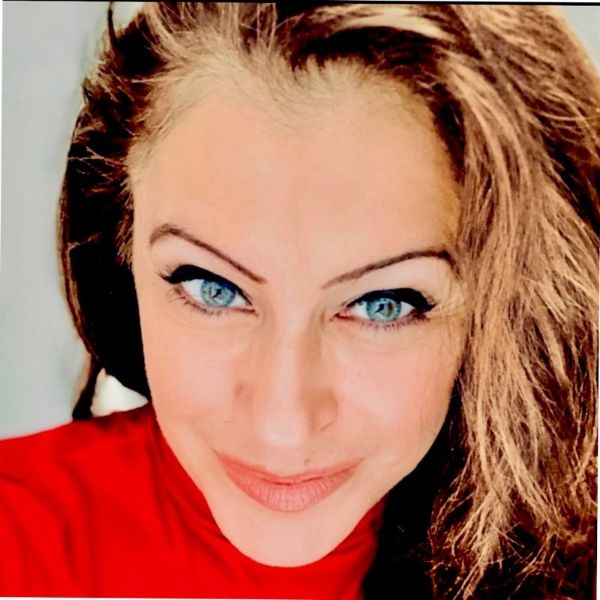
The Powerful Journey From Pharma to Medical Device Entrepreneurship
In this episode of the Medical Sales Podcast, Samuel sits down with Stéphan Toupin to unpack one of the boldest transitions in medical sales, from a successful pharmaceutical career into the riskier but far more flexible world of medical device distribution and entrepreneurship. Stéphan shares why he willingly took a major pay cut to leave pharma, how freedom mattered more to him than salary, and what it really looked like to build something of his own from the ground up after divorce, major life change, and a move from Canada to the United States. He explains the key differences between pharma and med device, why distribution can offer unlimited upside for the right person, and what people misunderstand about the U.S. medical device market. He also breaks down how his company now helps foreign medical device manufacturers enter the U.S. by supporting everything from strategy and importing to warehousing, distribution, and commercialization. This is a must listen for anyone curious about entrepreneurship in med device, the distributor path, and what it truly takes to bet on yourself.
Connect with Stéphan Toupin: LinkedIn
Connect with Me: LinkedIn
Love the show? Subscribe, rate, review, and share! Here’s How »
Listen on Spotify or Apple Podcast
Transcription:
Samuel Adeyinka (Host):
Hello, and welcome to the Medical Sales Podcast. I’m your host, Samuel, the founder of a revolutionary medical sales training and mentorship program called the Medical Sales Career Builder. And I’m also host of the Medical Sales Podcast.
On this podcast, I interview top medical sales reps and leading medical sales executives across the entire world. It doesn’t matter what medical sales industry, from medical device to pharmaceutical to genetic testing and diagnostic lab. You name it. You will learn how to either break into the industry, be a top 10 percent performer within your role, or climb the corporate ladder.
Welcome to the Medical Sales Podcast. And remember, I am a medical sales expert sharing my own opinion about this amazing industry and how it can change your life.
Samuel Adeyinka (Host):
What kind of money were you making as a sales rep, sales manager. And then what kind of pay cut did you take just to get into that med device world.
Stéphan Toupin (Guest):
As a sales rep, depending on the commission structure, you can have a good year and then the next year you’re at the bottom. Everybody’s used to that in sales.
But entry salary around 75 grand was feasible, with 20 to 25 thousand in commission. That was doable then and it’s still feasible today.
As a sales manager, you start in the six figures at least.
My guess now is people are higher, maybe 150 base plus commission. Easy to make 200,000 per year as a manager in both pharma and med device.
In med device right now, especially spinal and ortho, it’s getting tougher. A couple years ago people could easily make half a million between base and commission, but it’s not like that anymore.
And when I moved to med device, especially distribution, you don’t have the same benefits you get if you work for a major company like Medtronic or JNJ.
So when I look at what I was making in pharma, I probably gave up about 50,000 from my overall paycheck.
Samuel Adeyinka (Host):
Wait a minute. You’re telling me you were going to make much less.
Stéphan Toupin (Guest):
Yes.
But at that time, when I took the decision to move to med device, I was never a good employee in the sense that I don’t like having a boss. It’s always difficult for me.
So for me, it was better to go on my own and build something from the ground up.
Samuel Adeyinka (Host):
Let’s go deeper.
Before we do that, what were you selling in pharma. I know it was a suite, but what were the most common products.
Stéphan Toupin (Guest):
Mostly cardiology, gastroenterology, and psychiatry.
Those were the three big ones for 17 years.
Samuel Adeyinka (Host):
When you transitioned into device, what field did you start in.
Stéphan Toupin (Guest):
At that time, my friend was more in interventional radiology, interventional cardiology, and vascular surgery.
It’s rare to move from pharma to device and still meet the same customer.
In cardiology pharma, you sell to the cardiologist seeing patients.
In device, you’re often dealing with the interventional cardiologist who gets the patient from the cardiologist to intervene.
So you start almost from scratch.
You can use past relationships to get access, but it’s not the same physician.
Samuel Adeyinka (Host):
So you’re entertaining your friend, taking a 50,000 pay cut.
What gave you the comfort to say, I have responsibilities, I have kids, life, and I’m going to make 50 grand less.
Stéphan Toupin (Guest):
Freedom.
And I got divorced at that time too, so it wasn’t the best situation.
Samuel Adeyinka (Host):
Now we’re getting to the good stuff.
So you got divorced and you’re like, I want to change everything. What am I going to do. I’m assuming that was the sentiment.
Stéphan Toupin (Guest):
Yes.
You’re at a point where it’s now or never.
If I don’t do it now, I will stay in the same position and feel miserable.
That was my point of view.
And I had money aside I could rely on.
Because when you go into distribution, you don’t have the company car and certain benefits. You have to plan for that.
That’s why pharma is interesting. And if you work for a big device company, you get those benefits too.
But I didn’t want the big corporation. I didn’t want to be in that square box.
I wanted freedom.
Samuel Adeyinka (Host):
It’s admirable.
Most people go from pharma to med device by working for a company and learning the ropes.
You went straight to distribution. That takes confidence.
Stéphan Toupin (Guest):
If the only thing in life for you is to make as much money as possible, you won’t do what I did.
For me it wasn’t about money.
It was freedom. Being able to decide what time I wake up, what time I finish, and do my own schedule.
And choosing products.
In pharma, you don’t choose what you promote. It lands on your desk and that’s what you sell.
In distribution, you can choose what you want to promote.
Samuel Adeyinka (Host):
Did working with your friend first give you the confidence before you started your own thing.
Stéphan Toupin (Guest):
Yes.
It was new for me. You can read about it and listen to podcasts, but being in it is different.
It happened that I was good at it. I was happy. I was passionate.
And everyone around me supported my decision, so it made sense.
Samuel Adeyinka (Host):
So you worked with your friend for a while before you opened your own distributorship.
Stéphan Toupin (Guest):
Yes.
And until a couple weeks ago, I was still doing work with him. I kept that relationship until recently.
Samuel Adeyinka (Host):
So your company wasn’t competing with your friend. It was more like you were working together.
Stéphan Toupin (Guest):
Yes. We were working together.
It was very organic.
I would see products at conventions and say, this might be interesting for you.
That partnership worked for many years.
And that partnership is actually what brought me to the US.
Samuel Adeyinka (Host):
Okay. So your pharma days were in Canada.
You’re in Canada, then you explore the US market.
Walk us through what happened.
Stéphan Toupin (Guest):
My friend’s distribution company was also manufacturing some basic products in interventional cardiology.
He asked me to train reps in Canada. So I traveled in Canada doing trials in hospitals.
Then he said, let’s look at Europe. So I traveled in Europe to find distribution and do trials. I went to Finland, for example.
Then we started to look at the US market, because it’s the biggest medical device market in the world.
In Canada, he had close to 70 percent market share with that product.
So we said, let’s look at the US.
I built a plan to explore the US market, a marketing plan.
And it made sense to start on the East Coast for that product because of the cath lab volume.
Florida, and especially Miami, made sense for partnerships with distributors, physicians, and hospitals.
So about ten or eleven years ago, we built that plan and I came to the US for six months.
As a Canadian, you can be in the US for six months without a visa.
I wasn’t technically working. I was here to explore the market.
And once I got here, I realized winter wasn’t for me.
I love the beach. I wasn’t going back.
I sold my house in Quebec City, bought a condo there to keep a place, and moved to Miami.
Samuel Adeyinka (Host):
And you were basically saying, I’ve got to make this work.
Stéphan Toupin (Guest):
Yes.
And it was good timing.
My mom passed away ten years ago.
My kids were old enough. My son is 30 now, so he was 20 then. They were on their own.
My mom passed away, and I felt ready to try something else.
After six months in the US, I realized there was an unmet need here.
And that’s how I started the company in the US.
Samuel Adeyinka (Host):
You mentioned freedom as one reason to go the distributorship route.
Besides freedom, why would someone make that decision.
And for someone listening right now, what are the benefits of going that route. What’s the financial expectation.
Stéphan Toupin (Guest):
You need to be very comfortable with risk and the unknown.
That defines my path.
At one point, I needed to take risk. I’m not comfortable with the status quo. Something has to change.
Freedom is the big part, but I also looked at potential.
The potential is limited or unlimited depending on what you want to build.
I wanted to take decisions, choose products, and find a way to be successful.
And when people look at the US market and the American dream, it’s not easy.
Especially as an immigrant, you start from scratch.
It’s tough. I could talk for hours about how difficult it is.
But we built a business that serves over 100 foreign companies entering the US market.
It’s growing every day.
Today I had four conference calls before this one with foreign companies.
I think I was in the right place at the right time, and I also had the sense of what was needed.
After six months in the US, I realized something was missing.
Foreign companies had difficulty and I was surprised they couldn’t find everything under one roof.
That’s how I built a one stop shop for foreign medical device companies entering the US market.
And financially, the profit and money is unlimited. There’s no limit.
Samuel Adeyinka (Host):
You can’t say no to that.
Stéphan Toupin (Guest):
But it’s not a 9 to 4 job.
In pharma, you can have a 9 to 4, working when offices are open.
In med device, depending on the space, it can be nights and weekends.
I still have a distribution company in Canada, and we do a thrombectomy device for DVT and PE in Quebec.
You get called at night and on weekends. You have to be ready.
That’s a huge difference from pharma.
Samuel Adeyinka (Host):
So you’re saying the upside is unlimited, but you have to work for it. Whatever number you want, you have to put in the work.
Stéphan Toupin (Guest):
Yes.
I leave home around 6:30 or 7, and I’m always the last one to leave because it’s my business.
I have employees, but it’s still my business.
It’s long hours.
But even in pharma, I was proud of not working weekends.
Family mattered to me. My kids, my partner.
I’m not saying I never open my computer on weekends to answer a quick email, but I try not to work weekends.
I work hard during the week, but not during the weekend.
Samuel Adeyinka (Host):
You have to manage you time and family time, or you go insane.
Stéphan Toupin (Guest):
Yes. And you lose the passion.
Samuel Adeyinka (Host):
Tell us in as much detail as you can.
What exactly does your company do.
Stéphan Toupin (Guest):
We specialize in helping foreign medical device manufacturers enter the US market.
Every country has its own approval system and its own way hospitals buy.
Canada is more public. The US is a mix of public and private.
That’s complicated for foreign companies.
We work mainly with small startups and small to medium sized companies.
Big companies usually already have an office here.
But there are tons of small companies with incredible innovation, especially now with AI.
They look at the US market and think they understand it, but most of the time they’re way off.
We help them enter the US market as a one stop shop.
We manage importation because we’re registered with the FDA as an importer.
We built warehousing capacity so they can keep a small inventory in the US. International shipping has cost and customs issues.
We hold inventory and do domestic shipping to hospitals or distributors.
We help with reimbursement strategy, FDA registration, distribution.
We sit down and say, tell me what you need, and we help you.
We serve over 100 foreign medical device companies right now.
And it ranges from basic products like glasses or toothbrushes, those are medical devices, people don’t realize.
Condoms are medical devices.
And it goes all the way up to C arms and large capital devices.
Interventional radiology, interventional cardiology, spine, ortho, everything.
Samuel Adeyinka (Host):
When you say help them bring the product, are we talking marketing, compliance, or how the market actually adopts it.
What do you mean by help.
Stéphan Toupin (Guest):
First step is education.
They reach out through Google ads outside the US or referrals.
The first Zoom call is usually question and answer, and a reality check.
Because a lot of companies think, we have a product, we’ll launch in the US and in six months we’ll make millions.
That’s not how it works.
So we bring them down to reality and see if they actually understand the US market.
Here in the US, if you bring a new product that doesn’t exist yet, my first question is, how is it going to get reimbursed.
Because someone has to pay for it.















 Medical Territory Manager!
I was a Regional Sales Representative for Long-Term Care pharmacy services. I had dreamed of getting into the med sales industry when I went into my career as a nurse, but the pharmacy sales job came to me, and I had just settled. Fortunately, I had a job shakeup that allowed me to determine that now was the time to pursue my original vision.
I absolutely would not have this position without Samuel and the Evolve Your Success community. A lot of people my age would just stop trying, but EYS believed in me.
EYS allowed me to break into the industry in 90-Days after I had been trying on my own for over two years! I had lots of recruiter screenings, and a few interviews with hiring managers, but I was never offered a position.
Before EYS, I didn’t realize I was doing the bare minimum to get hired. I was applying everywhere, hoping to get noticed and waiting. It just wasn’t working! I didn’t know that that was not enough to compete in an industry this sought after, and against people who knew what I didn’t know about the process.
Of course, I had to think hard before making a financial investment that’s reasonably substantial. But when I read the testimonials of real med sales reps on the site and learned that I wasn’t the only one taking a chance on my success, that EYS was sharing that risk also, I knew I had to do it. Though you might be able to cobble together some of the steps of getting a role in med sales from online research on your own, you just can’t know what you don’t know!
The process of going through EYS presents this insider knowledge to the student, as well as giving you a progression of difficulty as you obtain the information, and you begin to master it. Not only that, but they give you access to amazing mentors and instructors, allow you to practice your interview skills, and teach you how to market yourself through social media and your own website! I cannot stress enough that EYS was the factor that made the difference in my successfully landing my dream job! The support, structure, and knowledge gained was invaluable!
I would recommend this course to ANYONE looking to break into medical sales
Thank you so much, EYS! This journey has been life changing and has resulted in the successful culmination of my 18-Year ambition!
Medical Territory Manager!
I was a Regional Sales Representative for Long-Term Care pharmacy services. I had dreamed of getting into the med sales industry when I went into my career as a nurse, but the pharmacy sales job came to me, and I had just settled. Fortunately, I had a job shakeup that allowed me to determine that now was the time to pursue my original vision.
I absolutely would not have this position without Samuel and the Evolve Your Success community. A lot of people my age would just stop trying, but EYS believed in me.
EYS allowed me to break into the industry in 90-Days after I had been trying on my own for over two years! I had lots of recruiter screenings, and a few interviews with hiring managers, but I was never offered a position.
Before EYS, I didn’t realize I was doing the bare minimum to get hired. I was applying everywhere, hoping to get noticed and waiting. It just wasn’t working! I didn’t know that that was not enough to compete in an industry this sought after, and against people who knew what I didn’t know about the process.
Of course, I had to think hard before making a financial investment that’s reasonably substantial. But when I read the testimonials of real med sales reps on the site and learned that I wasn’t the only one taking a chance on my success, that EYS was sharing that risk also, I knew I had to do it. Though you might be able to cobble together some of the steps of getting a role in med sales from online research on your own, you just can’t know what you don’t know!
The process of going through EYS presents this insider knowledge to the student, as well as giving you a progression of difficulty as you obtain the information, and you begin to master it. Not only that, but they give you access to amazing mentors and instructors, allow you to practice your interview skills, and teach you how to market yourself through social media and your own website! I cannot stress enough that EYS was the factor that made the difference in my successfully landing my dream job! The support, structure, and knowledge gained was invaluable!
I would recommend this course to ANYONE looking to break into medical sales
Thank you so much, EYS! This journey has been life changing and has resulted in the successful culmination of my 18-Year ambition! 


 Sports Medicine in Phoenix! I extend so much gratitude to the Evolve Your Success group as I land this role and get ready to pursue my dream job. I am a Physical Therapist who became a little stuck in the profession due to issues with reimbursement and the difficulty for continued growth upwards. I turned to EYS to assist me in learning about the medical sales industry and gain knowledgable mentors who were able to help coach me in this process. I am a strong believer in surrounding yourself with the best and good things will happen. I did work hard, but with the support of my mentors and other colleagues going through a career change, I felt a sense of community and it confirmed my drive to get into this industry. I have already learned so much through the interview process, and feel very blessed to have had the resources this group provided. I have made lifelong friends and I cannot wait to continue to follow others’ journeys to pursue this incredible field. I urge you to give Evolve Your Success a try to gain mentorship, guidance, and support through any career transition.
 and am excited to make a difference in patients’ lives as a Pharmaceutical Sales Specialist.
 ! Though I truly enjoyed working as a physical therapist, I can’t wait to start my career in the sales world as a Clinical Account Executive.
 . I owe this opportunity to Samuel, the program, and the incredible mentors at EYS.