The Proven Skills Every Medical Sales Rep Needs to Thrive
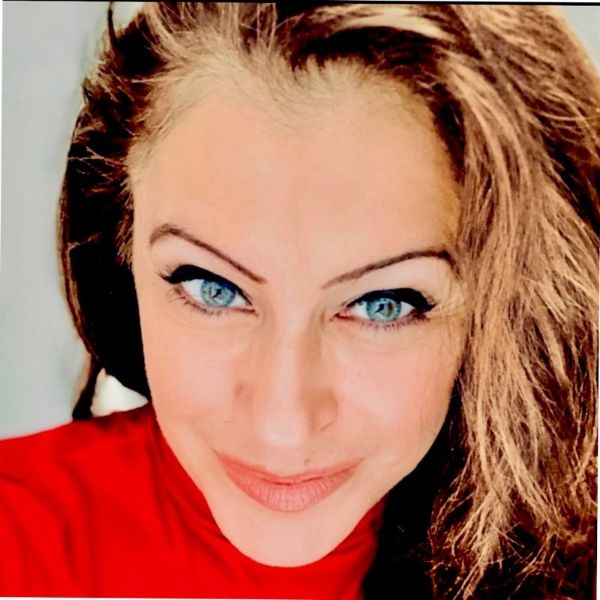
In this episode of the Medical Sales Podcast, Samuel sits down with Amy Harrington, a seasoned sales training and enablement leader who has built and scaled training programs across startups and global medtech organizations. Amy shares her unconventional path from surgical tech to nurse to orthopedic rep, and ultimately into becoming a trusted architect of sales education and practice development. She breaks down what truly makes sales training effective, why confidence comes from knowledge, and how reps can sell with science instead of scripts. This conversation pulls back the curtain on how great training bridges clinical complexity and real-world selling, why acronyms and rigid sales models often fall short, and how emotional intelligence, curiosity, and practical learning separate average reps from top performers. Whether you’re a rep looking to sharpen your edge or a leader building sales teams that actually perform, this episode delivers real insight into how sales training should work in today’s medical sales landscape.
Connect with Amy Harrington: LinkedIn
Connect with Me: LinkedIn
Love the show? Subscribe, rate, review, and share! Here’s How »
Listen on Spotify or Apple Podcast
Transcription:
Samuel Adeyinka (Host):
Hello and welcome to the Medical Sales Podcast. I’m your host, Samuel, founder of a revolutionary medical sales training and mentorship program called the Medical Sales Career Builder. And I’m also host of the Medical Sales Podcast.
In this podcast, I interview top medical sales reps and leading medical sales executives across the entire world. It doesn’t matter what medical sales industry, from medical device to pharmaceutical to genetic testing and diagnostic lab. You name it. You will learn how to either break into the industry, be a top 10 percent performer within your role, or climb the corporate ladder.
Welcome to the Medical Sales Podcast. And remember, I am a medical sales expert sharing my own opinion about this amazing industry and how it can change your life.
Samuel Adeyinka (Host):
So, I was reading your profile and it looks like you’re the head honcho who makes all these training programs for med tech companies. Is that accurate, or am I going in the wrong direction here?
Amy Harrington (Guest):
I don’t know if I would describe it as head honcho.
I definitely don’t think I’m the head honcho or feel like I’m the head honcho.
But I do think I figure out what needs to get done, roll my sleeves up, and get it done.
I’ve worked a lot with startups, so I get a little scrappy. It’s that startup environment where you wear many hats.
From a 10,000-foot view, as a VP of training or practice development, I’ve worn two hats for the last couple of years.
Most of my career has been in training, but I’ve evolved into also running teams for practice development.
Simply put, my job is to make sure the sales team knows their stuff.
They need to have the knowledge. They need to know inside and out what they need to talk to customers, whether that’s the science of skin, the mechanism of action of a technology, or whatever else is required.
The goal is that the medical professional feels confident after that interaction, whether it’s with a clinical person on a clinical training team or a salesperson on a sales team.
They need to feel confident buying our products first and then using the device moving forward.
Like every other professional in the training realm, I translate a lot of the technical stuff, the science, the clinical information, into a practical form.
I bridge that gap and help the salesperson sell with science, clinical knowledge, and the language they need to do that.
Samuel Adeyinka (Host):
So are you the kind of person that can approach a startup, see that they have a valuable product with a valuable offering, and maybe five to ten people who can actually get this thing sold, and then say, okay, this is the framework, this is what it’s going to look like, this is the execution, and I’ll help you roll this out?
Amy Harrington (Guest):
It’s hard to pinpoint exactly what it is because it’s so many different things.
I go in and ask, what is our ultimate goal?
For example, right now, the ultimate goal might be that we need to onboard ten new capital sales reps and train them on everything related to the company, the technology, the science, the culture, all of it.
So I take all of the learning needs and translate that into something digestible for that group.
The next group might only be clinicians. The next group might only be marketers.
So I customize everything I have.
And if I don’t have something I need, I build it. I create whatever resource is needed.
It could be new curriculum. It could be taking a very complex clinical study or clinical data and translating it into practical knowledge that helps a salesperson sell.
It also helps them become more confident because I’m breaking it down into bite-sized pieces they can understand.
However long or basic I need to make it, I look at my audience and customize the material so they can digest it and go out and do their role.
I think my job comes down to connection.
I’m connecting what we have, what we don’t have, where the gaps are, and I’m creating and building the architecture around how to bridge those gaps and build the knowledge for sales, clinicians, and customers.
Whatever tools and strategy are needed, I’m creating that architecture.
Samuel Adeyinka (Host):
As VP, are you the final say?
Do you have someone you report to on what you want to do?
What’s the reality?
Is it like, Amy, we need this figured out, it’s all you?
Or is it more like, I really want to do this, but I need to get approval before I roll this out?
Amy Harrington (Guest):
I don’t think anything is always normal.
The culture in every organization is different and unique.
I’ve been in both roles.
I’ve been in the role where there was a lot of micromanagement, for lack of a better word.
I had to say, I’d really like to do this, can I do this?
And in the pharmaceutical industry, there are more regulations and more guidelines. You have to stay within your boundaries.
But when you get into different fields, those fields have different cultures.
I’ve also worked in environments where they say, we hired you, we trust you, here’s the end goal, go do it.
That’s where I thrive.
I thrive in environments where I have the individuality to build and create the tools.
That’s the environment I’m in right now.
I’ve been fortunate to have mentors on the sales side who have said across multiple companies, Amy, we need you to come build this program. Come with us. Come build this program.
Then five years later, they say, Amy, come with us to this program.
So I’ve gotten to a point in my career where I have more autonomy, and that is a good environment for me to thrive in.
Samuel Adeyinka (Host):
I love it.
Amy, please share with us. What type of company do you work for now?
Amy Harrington (Guest):
I’m currently with a startup company.
It’s a medical device company in the aesthetic industry.
Our call points are dermatologists, plastic surgeons, solo estheticians, medical spas, and franchise medical spas.
Those are the people we sell our device to.
Samuel Adeyinka (Host):
That’s cool.
How many different industries have you worked in within medical sales?
Amy Harrington (Guest):
That’s a good question.
I started with this back and forth in my career, which leads into one of the pillars I believe in.
If you ask me what advice I give reps, one thing I always say is just say yes to opportunity, even if it’s not exactly what you thought you would be doing.
Because it grows legs. It evolves. You meet people who give you opportunities down the road.
That’s how my career transpired.
I started off being asked to learn how to be a surgical tech.
I was working in a medical office, and someone I knew asked if I would be interested in being a surgical tech.
I didn’t even know what a surgical tech was.
Samuel Adeyinka (Host):
Was that someone at the office or a stranger?
Amy Harrington (Guest):
Funny story.
The director of nursing was my high school softball coach’s wife.
I was a big athlete in school, and I had a really good relationship with my coaches.
His wife was the director of nursing.
She knew I was working in this office doing transcription, and I had two degrees at that point.
She said, why don’t you try something?
She asked, do you want to be a surgical tech?
So I went in to see one surgery. I peeked through the little window, and I was like, yes.
That’s how I started.
I became a surgical tech and grew from there.
At one point, it hit me at two in the morning while I was taking call and scrubbed into a case.
I thought, the nurse over there has basically the same education I do, and she’s probably making twice the amount of money. We’re working the same hours and working just as hard.
I thought, why am I not a nurse?
So I went back to school for an accelerated nursing program.
As soon as I graduated nursing, I started running all the ortho pods, what they called them.
I was doing all the ortho cases.
I had an amazing orthopedic surgeon mentor who taught me so much.
I became the case cover for orthopedics, and then I got seen by some orthopedic reps.
They asked, would you come work 1099 as an orthopedic rep and cover all the cases in this area?
And I said, yeah, sure.
Samuel Adeyinka (Host):
How long were you a nurse before you were poached?
Amy Harrington (Guest):
I was kind of getting poached when I was a surgical tech.
I kept entertaining it, but not jumping in.
But as a nurse, not long. Probably less than a year, maybe a year.
Samuel Adeyinka (Host):
Wow.
So you were barely a nurse, and you were already making the jump.
Amy Harrington (Guest):
Yes.
But I worked part time as an orthopedic rep. They were really flexible with me.
I worked full time as a nurse and part time as a rep.
Then the orthopedic companies started merging, Biomet and Zimmer, and things shifted.
Then another orthopedic group said, hey, would you come cover our cases, but we want you full time?
At that point I thought, wait a second. I just went to school for nursing. How am I jumping ship and going to work for an orthopedic company?
But again, going back to one of my foundational pieces of advice, just say yes. Try it. Do it.
Because there are always doors that open.
So I went and worked full time as a trauma and orthopedic rep, covering the state of Maine.
I learned a lot.
But I also learned I was not a great salesperson in that environment.
Samuel Adeyinka (Host):
Before we continue, I want to hang out where you had two jobs for a moment.
You were a full time nurse and a part time rep.
Because nursing has that three-day schedule, you had opportunities to be a rep and a nurse at the same time.
When you were full time nurse, part time rep, what was going through your mind?
Was it, oh my gosh, it would be so wonderful if I could do this rep stuff full time?
Or was it, this rep stuff is kind of cool, but I want to stay a nurse?
Amy Harrington (Guest):
You ask really good questions.
It was a long time ago, but I think I really loved the freedom and autonomy of being a sales rep.
It was difficult trying to do both at the same time because I was the nurse one day at the facility and then the rep the next day at the same facility.
The lines got a little blurry, and that made it very challenging.
But I loved doing both.
I only made the choice to go into repping full time because the opportunity presented itself, and I didn’t know if I would get that opportunity again.
I thought, I can always come back to nursing.
Samuel Adeyinka (Host):
Were you convinced of the opportunity?
Did you know this could be a big thing if you went full time as a rep?
Amy Harrington (Guest):
I don’t think I knew what it was when I was in it.
I was doing it because it was a fun opportunity and I love to learn.
I’m a lifelong learner.
I had just finished nursing, and now I was ready for the next thing to learn.
The hours were different. The pay was different.
As a new sales rep, I was making more than I was as a nurse.
Those were factors.
But it wasn’t like, oh my gosh, this is a huge opportunity and I could get into sales.
I never had aspirations to get into sales.
It was more like a natural progression. Opportunity to opportunity. Why not?
Samuel Adeyinka (Host):
You said you weren’t a good sales rep.
What was happening in the day to day that made you say, I am not good at this?
Amy Harrington (Guest):
I think it was about meeting expectations.
I was a clinician coming out of an environment where, first and foremost, it was about my patients.
It was about keeping my patients safe. It was about keeping the environment in the operating room safe for my patient and doing my job the best I could.
Then I had to shift gears and go into an operating room where there was a nurse taking care of a patient, and I had to speak to the orthopedic surgeon in the middle of a complex case while he was choosing, sizing, and cutting.
And I was trying to sell him what I had in my trunk because there was an X ray of a fracture that came on board.
There was a disconnect for me in selling in that environment because I was still, first and foremost, passionately a clinician.
I knew I shouldn’t be talking. I shouldn’t be disrupting him. I didn’t want to take his focus off the patient.
That was what mattered most.
But a lot of times, that was your only time.
Scrubbing into a case might be the only time you had the surgeon’s ear.
That’s where salespeople learn how to develop a pitch.
When you have three minutes while they’re scrubbing in before surgery, you have to tell them about the products you need to sell, push, or want them to try.
Samuel Adeyinka (Host):
I hope you’re enjoying today’s episode.
And I want to let you know our programs cover the entire career of a medical sales professional.
From getting into the medical sales industry, to training on how to be a top performer in the medical sales industry, to masterfully navigating your career to executive level leadership.
These programs are personalized and customized for your specific career and background, and trained by over 50 experts, including surgeons.
Our results speak for ourselves, and we’re landing positions for our candidates in less than 120 days in top medical technology companies like Stryker, Medtronic, Merck, Abbott, you name it.
Would you run an Ironman race without training and a strategy?
You wouldn’t.
So why are you trying to do the same with the medical sales position?
You need training. You need a strategy.
And you need to visit evolveyoursuccess.com, fill out the application, schedule some time with one of our account executives, and let’s get you into the position that you’ve always dreamed of.
Samuel Adeyinka (Host):
That’s fascinating.
So you were a rep, realized there was a gap in doing your job effectively, and of course, you didn’t like it.
Then you ended up becoming the trainer for how to do it effectively.
Before you explain that, close the gap for me.
You realized you weren’t good at this because of this issue. The physician needs to focus. I shouldn’t be selling them.
But you still understood, this is my job.
How did you resolve it?
Amy Harrington (Guest):
It was a high-pressure sale.
There was urgency because you needed to make a number, and that was the only time you were in front of the doctor.
That’s where I don’t think I flourished.
Where I did thrive was in-servicing and being there for the surgical tech.
Because in the back of my mind, I knew every instrument, every step of the surgery, exactly what they needed to do.
And when they ran into trouble, they turned around and said, Amy, what do we do?
So in that case, I was very valuable, and I could get business in turn.
I could translate that business slowly because they saw the value in me as a rep because I knew my stuff.
But when it came to asking for the business, I struggled.
So I recognized that my knowledge was my power.
Closing sales and asking for business was not where my power was.
So I started moving away from the sales position and toward a training position for a sales company because I knew that was what I was good at.
Samuel Adeyinka (Host):
What did that look like?
Were you a rep and took an in-house stint in training?
Did you leave the company?
How did it happen?
Amy Harrington (Guest):
At that point, I applied to go back into the operating room.
I needed a break.
Back in the day, we wore pagers. When you’re covering trauma, you could get a page at two o’clock in the morning. You could get a page when you’re out with friends at dinner.
When you’re covering the entire state, sometimes it’s like, okay, I’m six hours away. I’ll jump in my car and be there in six hours.
I remember driving in the wintertime in Maine for six hours to cover a case and be there for 7 a.m. cut time.
You walk into the operating room and the front desk says, oh, they didn’t call you? That case was canceled.
So I took a break.
I went back into the operating room for about five years.
I worked as a surgical tech and operating room nurse, both circulator and scrub.
Samuel Adeyinka (Host):
You left the sales world and went back to being a clinician.
Amy Harrington (Guest):
I did.
Samuel Adeyinka (Host):
A year after making that decision, were you itching to go back into corporate?
Or were you so glad you went back to being a nurse?
Where was your head?
Amy Harrington (Guest):
For a little while, I really liked the regular schedule and being able to have a life and plan.
You still take call as a nurse in the operating room, but at least you can plan that call.
You know which days you don’t have to be on call.
I needed the break, and I liked it.
But I was also itching in a sense because there is a lot of autonomy and freedom when you’re a rep.
You know your case schedule. You can drive there. If you’re on the road for three hours, you can call your parents and catch up.
As a nurse, you’re punching in and working hard.
They work so hard.
Then you punch out for a 30-minute lunch. It can’t be 29 minutes and it can’t be 31 minutes. You punch out for 30 minutes and you’re right back at it for a 10-hour day.
So I did love the freedom and pace of being a rep more than the nursing environment.
But there were so many things in the operating room that I absolutely loved too.
The fast pace. The trauma. Something new every day. Taking care of patients. The connection with patients.
You don’t get that when you’re a rep.
So there were good and bad things about both roles.
Samuel Adeyinka (Host):
When did you turn this into being a curriculum creator?
Amy Harrington (Guest):
That one, I cannot take credit for.
This one fell into my lap.
And this is where I think my career really started.
The other stuff was building blocks.
I got a call one day from someone who was in my position now.
At the time, she was a director of training and education for a medical device company in aesthetics.
I knew nothing about aesthetics.
They said Botox, and I thought, oh yeah, for the vocal cords.
I knew nothing about facial aesthetics, radio frequency, or lasers. It was a completely new world.
I got a call one day and they said, we saw your resume on Monster. We think you’d be a great fit.
And I was like, my resume hasn’t been online for five years.
They said, we think you’d be a really great fit for our organization. Would you fly to San Francisco and interview with us?
Again, I wasn’t looking. I wasn’t interested. I knew nothing about it. I didn’t want to be on the road traveling.
There were all these no’s in my brain.
But then I said, why not?
So I flew to San Francisco, did five interviews, took a red eye home, worked a 10-hour shift the next day, and they offered me the job.
And I was like, oh, now what?
It was a training job.
It was a clinical installation trainer role.
You go into the office and train the medical staff on all the technical aspects of the medical device.
That includes theory, didactic training, skin basics, skin histology, mechanism of action, all of it.
That is where I fell in love with training.
I had done it with orthopedics and in-servicing, but I really fell in love with training in this role because that was what I was doing every day.
Samuel Adeyinka (Host):
So it wasn’t training the sales reps. It was training the actual accounts.
Amy Harrington (Guest):
It was training the actual accounts until I made a name for myself and was recognized as a very good educator.
Then they sent me to Canada, Australia, and Amsterdam.
They had me train all of their global distributors.
I started training all new clinicians and clinical educators inside our organization.
Then I also ran new hire training for every new sales rep who came in.
Samuel Adeyinka (Host):
So you were training sales at that time too.
Take us to when you first started training the sales reps and had your first successful training class.
Was your head immediately saying, this is my passion, I found it, all engines go?
Or was it more nuanced?
Amy Harrington (Guest):
It was both.
My passion was rooted in the fact that I love to learn, but also because I was successful doing it every day.
I was appreciated and valued.
The Australian distributorship asked permission from my company to pay for everything and fly me to Australia for two weeks because they saw the value I could bring to their organization.
Those little wins and people acknowledging that I was really good at this fed my passion.
I realized I was providing value to sales reps, even if I didn’t fully see it at the time.
I kept having these successes where people were asking for me, I was winning awards, and I realized there was a reason I was doing this.
It was because I was good at it.
That naturally developed into a passion for it.
Samuel Adeyinka (Host):
That makes sense.
The sales enablement whisperer. I love it.
Let’s switch gears and talk about how reps can appreciate sales training.
There are a couple of myths I want to dispel.
People say when a company is cracking down and cuts have to be made, sales training is the first to go.
I’ve heard that my entire career.
But when I really think about it, especially now having a company myself, I’m not sure that makes sense.
If you get rid of a training department, what are you going to do with your reps?
When a new launch comes, when you’re trying to drive a goal and the gap can be closed but you don’t know how, I’m assuming that’s when training comes into play.
Is that a myth? Is that true? What are the realities?
Amy Harrington (Guest):
I’ve heard that too.
I’ve been at organizations where, when things looked unstable, people said sales training might be the first to go.
So I’ve heard it.
But in reality, my experience has been the opposite.
I’ve shown and built value around learning and enabling reps to sell with true knowledge.
I’ve also been through restructures of companies, and my team was one of the most valuable because at the end of the day, you still have to service your customers.
You still have to train your customers.
And if your customer is not using your device, and your salespeople can’t sell your device because they don’t have the knowledge, then it really starts with training.
So I wouldn’t necessarily say it’s a myth.
It just hasn’t been my experience at all.
Samuel Adeyinka (Host):
Fair.
So let’s talk about sales training.
You were a rep, and I’m sure as a rep you heard people say, oh man, another sales training.
Especially seasoned reps.
What are they bringing out this time? What’s the new spin this time?
How should reps really look at sales training in their organizations?
Why do reps need to be intentional about the training their companies offer, and what can it really do for them?
Amy Harrington (Guest):
Oh my gosh. How much time do we have?
I think I could write a book on this.
At the very foundation, it’s so important to learn your product inside and out because confidence comes from knowledge, and confidence sells.
People buy from someone who believes in what they’re selling, knows their product, can answer questions, and is confident in their answers.
So at the very basic level, you need to understand and know your product.
But I’ve been there.
I’ve done two weeks in Warsaw, Indiana for orthopedic training, and I remember being there thinking, oh my gosh, I cannot wait for this to be over.
When I was in it, I just wanted to go do my job.
I feel like a lot of organizations don’t do sales training well.
And I may have a unique philosophy on this.
Every organization I’ve ever interviewed with for a sales enablement role or training role always talks about their selling skills model, the memorized algorithms for how to sell.
I think it’s so much less complex than that.
As a sales rep, I’ve been through multiple different selling skills programs.
Ask me any question about them. I don’t even know what the acronyms stand for.
And I’m a learner. I love to learn.
But I don’t remember them because they weren’t meaningful to me.
To me, the knowledge is in the practical part of it.
That’s where I think I’ve created value in what I do.
I’m not going to tell you an acronym you need to memorize and say, this is how you sell.
I’m going to teach you the soft skills, emotional intelligence, and the practicality behind it.
Why do you need to know what this device does?
Why does this device do it?
Why does it do it this way?
I want to give you the why behind everything so you understand the importance.
I always say, let’s teach them how to fish.
Let’s teach you how to think through the problem.
So you’re not thinking, okay, I need to ask a question now.
A lot of it is foundational skills.
It’s listening.
Listen to your customers.
Understand what they want to know.
I can teach a rep how to go through a 50-slide pitch deck and tell them how to present every single slide on that pitch deck.
Samuel Adeyinka (Host):
I hope you’re enjoying today’s episode. And remember, I have a customized and personalized program that gets you into the medical technology industry as a sales professional, or any type of role for that matter.
Become a top performer in your position and masterfully navigate your career to executive-level leadership. Check out these programs and learn more by visiting our site.
Fill out an application, schedule some time with one of our account executives, and allow us to get you where you need to be.
Stay tuned for more awesome content with amazing interviews on the Medical Sales Podcast.

















 Medical Territory Manager!
I was a Regional Sales Representative for Long-Term Care pharmacy services. I had dreamed of getting into the med sales industry when I went into my career as a nurse, but the pharmacy sales job came to me, and I had just settled. Fortunately, I had a job shakeup that allowed me to determine that now was the time to pursue my original vision.
I absolutely would not have this position without Samuel and the Evolve Your Success community. A lot of people my age would just stop trying, but EYS believed in me.
EYS allowed me to break into the industry in 90-Days after I had been trying on my own for over two years! I had lots of recruiter screenings, and a few interviews with hiring managers, but I was never offered a position.
Before EYS, I didn’t realize I was doing the bare minimum to get hired. I was applying everywhere, hoping to get noticed and waiting. It just wasn’t working! I didn’t know that that was not enough to compete in an industry this sought after, and against people who knew what I didn’t know about the process.
Of course, I had to think hard before making a financial investment that’s reasonably substantial. But when I read the testimonials of real med sales reps on the site and learned that I wasn’t the only one taking a chance on my success, that EYS was sharing that risk also, I knew I had to do it. Though you might be able to cobble together some of the steps of getting a role in med sales from online research on your own, you just can’t know what you don’t know!
The process of going through EYS presents this insider knowledge to the student, as well as giving you a progression of difficulty as you obtain the information, and you begin to master it. Not only that, but they give you access to amazing mentors and instructors, allow you to practice your interview skills, and teach you how to market yourself through social media and your own website! I cannot stress enough that EYS was the factor that made the difference in my successfully landing my dream job! The support, structure, and knowledge gained was invaluable!
I would recommend this course to ANYONE looking to break into medical sales
Thank you so much, EYS! This journey has been life changing and has resulted in the successful culmination of my 18-Year ambition!
Medical Territory Manager!
I was a Regional Sales Representative for Long-Term Care pharmacy services. I had dreamed of getting into the med sales industry when I went into my career as a nurse, but the pharmacy sales job came to me, and I had just settled. Fortunately, I had a job shakeup that allowed me to determine that now was the time to pursue my original vision.
I absolutely would not have this position without Samuel and the Evolve Your Success community. A lot of people my age would just stop trying, but EYS believed in me.
EYS allowed me to break into the industry in 90-Days after I had been trying on my own for over two years! I had lots of recruiter screenings, and a few interviews with hiring managers, but I was never offered a position.
Before EYS, I didn’t realize I was doing the bare minimum to get hired. I was applying everywhere, hoping to get noticed and waiting. It just wasn’t working! I didn’t know that that was not enough to compete in an industry this sought after, and against people who knew what I didn’t know about the process.
Of course, I had to think hard before making a financial investment that’s reasonably substantial. But when I read the testimonials of real med sales reps on the site and learned that I wasn’t the only one taking a chance on my success, that EYS was sharing that risk also, I knew I had to do it. Though you might be able to cobble together some of the steps of getting a role in med sales from online research on your own, you just can’t know what you don’t know!
The process of going through EYS presents this insider knowledge to the student, as well as giving you a progression of difficulty as you obtain the information, and you begin to master it. Not only that, but they give you access to amazing mentors and instructors, allow you to practice your interview skills, and teach you how to market yourself through social media and your own website! I cannot stress enough that EYS was the factor that made the difference in my successfully landing my dream job! The support, structure, and knowledge gained was invaluable!
I would recommend this course to ANYONE looking to break into medical sales
Thank you so much, EYS! This journey has been life changing and has resulted in the successful culmination of my 18-Year ambition! 


 Sports Medicine in Phoenix! I extend so much gratitude to the Evolve Your Success group as I land this role and get ready to pursue my dream job. I am a Physical Therapist who became a little stuck in the profession due to issues with reimbursement and the difficulty for continued growth upwards. I turned to EYS to assist me in learning about the medical sales industry and gain knowledgable mentors who were able to help coach me in this process. I am a strong believer in surrounding yourself with the best and good things will happen. I did work hard, but with the support of my mentors and other colleagues going through a career change, I felt a sense of community and it confirmed my drive to get into this industry. I have already learned so much through the interview process, and feel very blessed to have had the resources this group provided. I have made lifelong friends and I cannot wait to continue to follow others’ journeys to pursue this incredible field. I urge you to give Evolve Your Success a try to gain mentorship, guidance, and support through any career transition.
 and am excited to make a difference in patients’ lives as a Pharmaceutical Sales Specialist.
 ! Though I truly enjoyed working as a physical therapist, I can’t wait to start my career in the sales world as a Clinical Account Executive.
 . I owe this opportunity to Samuel, the program, and the incredible mentors at EYS.